Barcelona on a budget
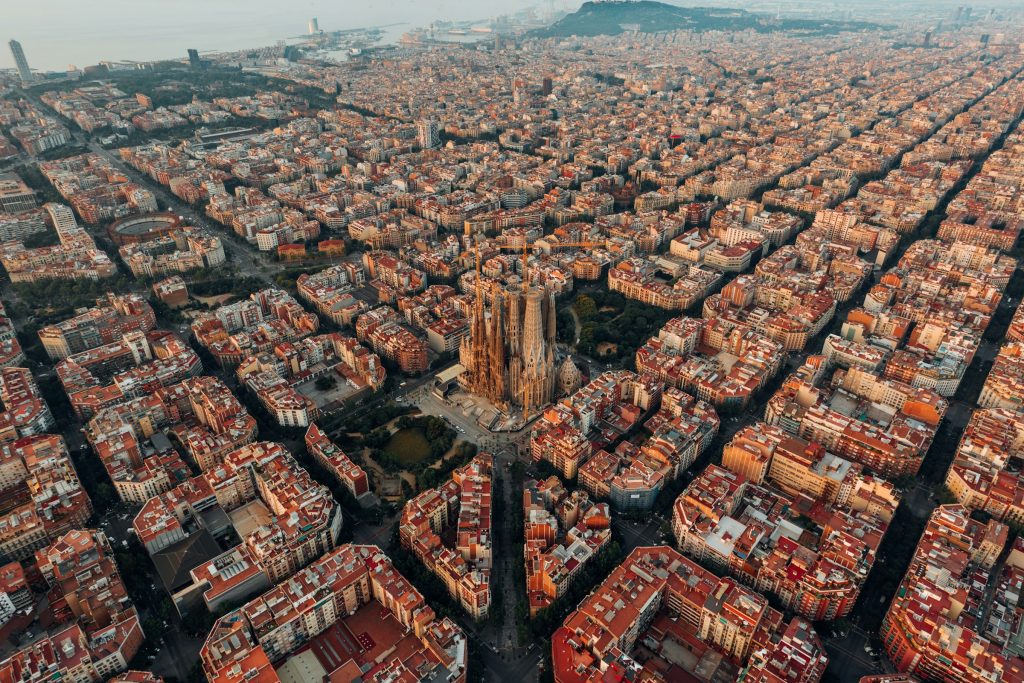
Barcelona is often seen as a city where budget travel is almost impossible: there are too many temptations, expensive neighborhoods, tourist hotspots, and extra costs that only become obvious once you arrive. But in practice, saving money here is absolutely possible if you avoid overpaying for the things that most often eat up the budget in the city.
Barcelona Budget Basics
- Real daily budget: around €80-130 in a budget format and €150-230 in a more relaxed mid-range one.
- Main expenses in Barcelona: most often accommodation, the tourist tax, and tickets to top attractions.
- Where you can save the most: on the area you stay in and the number of paid attractions you do per day.
- Best areas for a budget stay: Sants, Poble-sec, Gràcia — usually more reasonable in price than the most touristy center.
- Best way to get around cheaply: walking + public transport; for a short trip, this is usually the best balance of cost and convenience.
- What about tickets: it is usually better to look at travel passes and transport cards instead of buying lots of single rides.
- Where to save on food: menú del día, bakeries, markets, simple local cafés, and supermarkets.
- How to see attractions more cheaply: choose 1-2 paid sights, and fill the rest with free neighborhoods, parks, and viewpoints.
- 3 budget-friendly activities: the Gothic Quarter, Parc de la Ciutadella, and a walk around Montjuïc or to free panoramic viewpoints.
- Typical mistake: staying in the most touristy center and then overpaying even more for spontaneous tickets, taxis, and food “on the go.”
Getting Around Barcelona Without Overspending
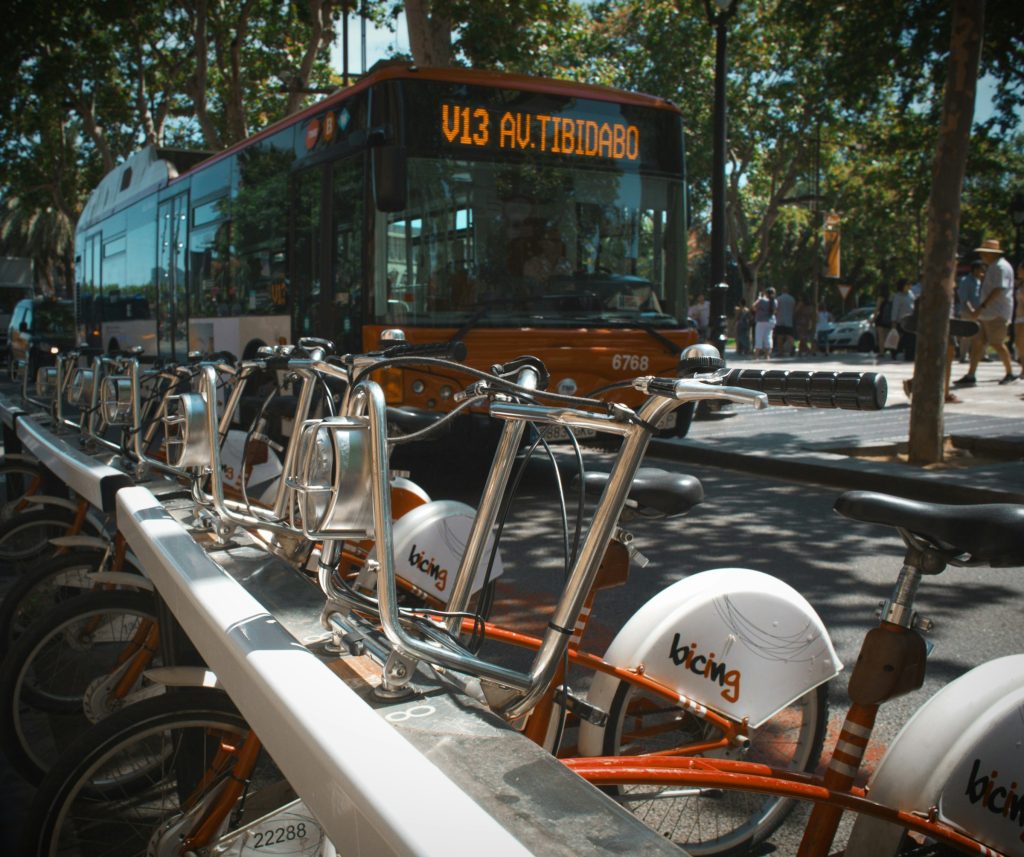
In Barcelona, the best setup for a short trip is usually walking + public transport. The city is large, but many areas are easy to explore in sections, while the metro, buses, tram, and some suburban lines cover almost all typical tourist scenarios without the need to spend money on taxis. For budget travel Barcelona, this is usually the most sensible option: on foot, you avoid overpaying for short distances, and you use transport only where it really saves time.
As for tickets, the logic is simple: single tickets only make sense if you barely use public transport. In most typical trips around Barcelona, it is more cost-effective to look at integrated cards and travel passes instead of constantly buying single rides. It is also important to remember that a standard TMB single ticket is not valid for the Aeroport T1 and Aeroport T2 stations on the L9 Sud line, and for the airport metro you need a special airport ticket unless you already have a suitable travel pass.
For tourists, the two most common approaches are usually compared. The first is integrated trips/cards for the number of journeys you actually need, if you are not planning to travel too much. The second is the Hola Barcelona Travel Card, if you have a packed 2-5 day itinerary and know you will be using public transport a lot, including trips to and from the airport. This card covers the metro, TMB buses, the Montjuïc funicular, FGC, TRAM, and Rodalies in zone 1, and it also includes metro journeys between the airport and the city.
From the airport, it is usually much cheaper to get into the city by public transport rather than by taxi. The metro is convenient, but not always the cheapest option, because the airport line works under a separate fare. So before the trip, it is worth comparing the metro with other public transport options for your accommodation area instead of taking the first method that seems familiar “by default.”
Five Smart Ways to Keep Transport Costs Down
- Do not take taxis unless there is a real need — in most tourist scenarios, the metro and buses cover the route just fine.
- Do not buy too many single tickets if you plan several rides a day — a card or pass is usually better value.
- Think about the area you stay in together with the transport logic: accommodation a bit farther out but near a metro station is often better value than “almost central” places you still need to travel from.
- Remember the airport detail: a standard TMB single ticket does not cover the metro from Aeroport T1/T2.
- Walk through areas in blocks: for example, do not keep taking transport between neighboring central districts if they are easier to combine into one walk.
What a Barcelona Trip Actually Costs
Put simply, a budget trip to Barcelona usually comes to around €80-130 per day per person, while a more relaxed mid-range format is usually around €150-230 per day. In a budget scenario, that normally means a hostel bed or a simple room, public transport without unnecessary rides, low-cost food, and at most one paid attraction per day. In a mid-range format, it is more often about a private room, a more convenient location, cafés without constant budgeting, and a few paid attractions.
In Barcelona, it is usually not the small everyday purchases that eat up the budget most, but accommodation, the tourist tax, and tickets to the most popular places such as Sagrada Família, Park Güell, or Casa Batlló. So the main principle here is simple: the biggest savings usually come not from skipping coffee or one metro ride, but from choosing the right area, the right type of accommodation, and limiting how many paid attractions you include in your itinerary.
Best Areas to Stay in Barcelona on a Budget
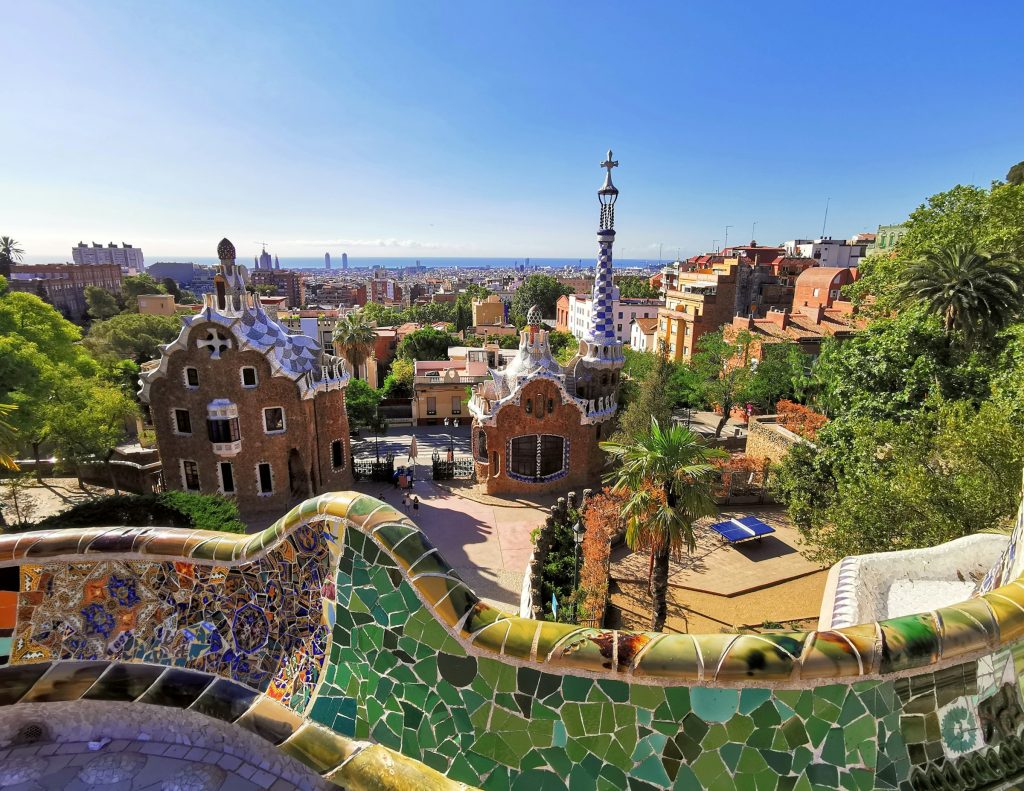
In Barcelona, your budget is affected not so much by the class of accommodation as by the area you choose. The most touristy parts of the old center may look convenient on a postcard, but they are usually weaker in terms of value for money. For a budget trip, the better choice is often districts from which you can get to the center quickly without overpaying just for the address. The city tourist tax also adds to the cost of each overnight stay, so the difference between “staying in the center just because it is the center” and choosing a smarter base often turns out to be noticeable.
Sants is one of the most practical options for those who want convenient logistics and more moderate prices. The area works well because it has strong transport connections, including the major Barcelona Sants railway station, so it is especially useful for a short trip and for those planning to move around the city a lot or travel beyond it. It is not usually the most atmospheric district for postcard-style walks, but as a base for budget travel Barcelona, it works very well.
Poble-sec is a good compromise between price, location, and the feeling of a lived-in city. It is closer to the center than many other “budget” areas, sits near Montjuïc, and is usually calmer and more practical than staying right by La Rambla. It is a solid option for those who want to walk a lot and not overpay for the most touristy address.
Gràcia is more often chosen by those who care about local atmosphere, cafés, small squares, and the feeling of a more residential Barcelona. The area is well connected by public transport: metro lines L3 and L4 serve Gràcia, so getting around is convenient, but prices here can be uneven — some options are still reasonable, while others move closer to the mid-range segment.
Poblenou is worth considering for those who want a calmer base, proximity to the sea, and less tourist pressure. It is usually not the kind of area where you are “two steps from everything,” but it often makes more sense for travelers looking for a good balance of price, comfort, and a more relaxed side of the city.
As for accommodation types, the logic is simple: a hostel is the cheapest option for a short trip; a budget hotel is more comfortable if privacy and predictability matter; an apartment often becomes better value for two people or for a stay of several days, especially if you want to cook from time to time; a room suits those who want to cut costs but avoid the hostel format. Because of the tourist tax and Barcelona’s overall price level, it is usually the type of accommodation and the area that determine whether the trip stays within budget.
Five Booking Tips That Can Save You Money
- Do not get fixated on the Gothic Quarter or La Rambla — these are the places where people often overpay the most just for a postcard address.
- Always calculate the cost of accommodation together with the tourist tax, not just the nightly rate. In Barcelona, this can be a noticeable part of the total.
- Check how close the place is to a metro or rail station, not just the “distance to the center.” In Barcelona, that is often more important.
- Compare a room, a hostel, and a simple hotel instead of searching only within one format: the difference in both price and comfort can be surprisingly large.
- Book early for the high season, because good budget options in Barcelona disappear faster than the city map makes it seem. This is especially noticeable in areas that offer the best balance of price and transport convenience.
How to Eat Well in Barcelona on a Budget
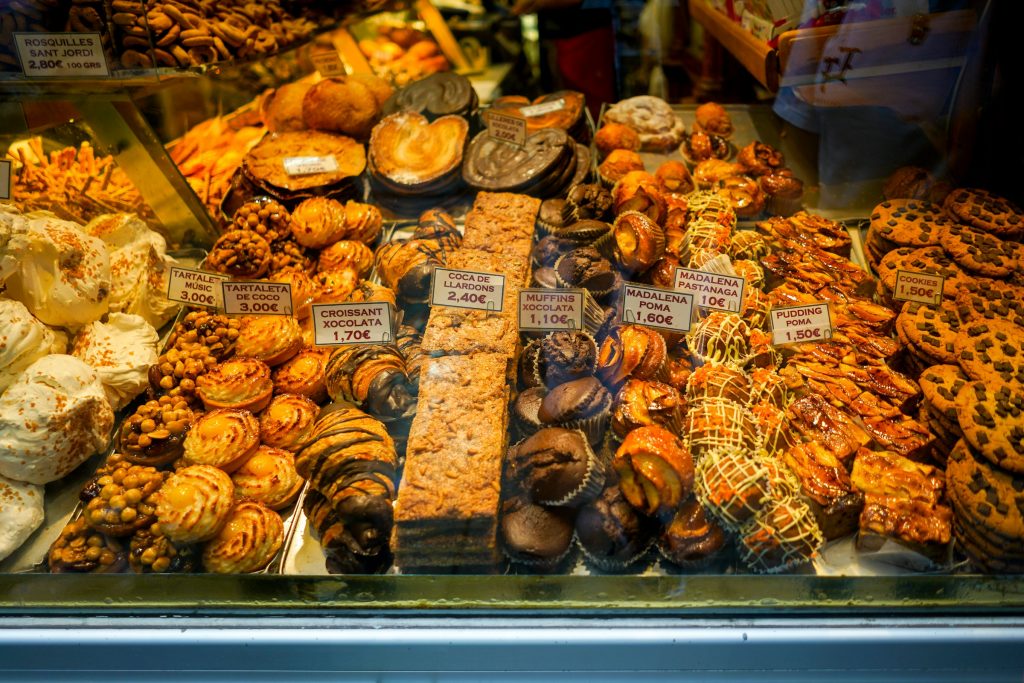
In Barcelona, the easiest way to save on food is not through “hardcore budget cutting,” but by choosing the right format. The most practical option for a daily budget is the menú del día: a fixed lunch menu that usually remains one of the best-value ways to eat properly in the city. Based on recent benchmarks, these lunches most often stay around €10-15, while in more touristy areas they can be higher.
Bakeries, simple cafés, markets, and supermarkets for snacks also work well, especially if you do not try to eat on the go right next to the main tourist hotspots. The logic with markets is simple too: they are convenient for quick snacks and groceries, but in the most heavily promoted places like La Boqueria, prices and tourist crowds are often less favorable than in more local market formats. In that sense, it makes more sense to look not only at “the most famous market,” but also at calmer options like Santa Caterina or district markets.
How to Spend Less in Barcelona’s Tourist Zones
- Look at the menú del día first, not the a la carte menu.
- Walk a couple of streets away from La Rambla, Sagrada Família, and other top spots — the price difference can be very noticeable there.
- Do not rely only on tapas in tourist areas: in Barcelona, this is not always the cheapest format, especially if you order many small items separately.
- Use markets and supermarkets for breakfasts and simple snacks, and move your main meal to lunchtime.
- Check whether the drink and bread are included in the menú del día — that is often what makes the format really good value.
- Do not eat at the first place you see in the middle of a tourist hotspot, especially if the venue is clearly aimed at passing crowds rather than locals.
Which Attractions Are Worth Paying For
In Barcelona, a city pass is not necessary for everyone. It makes sense if you have a very packed itinerary: lots of museums, active use of public transport, and several paid attractions within 2-3 days. If you are visiting Barcelona on a budget, it is often better to buy tickets separately and avoid overpaying for a package you will not fully use. The official Barcelona Card includes public transport, free entry to some museums, and discounts, but it works best for a really busy schedule.
With the most popular places, the logic is simple: Sagrada Família, Park Güell, and Casa Batlló are better planned in advance. These are exactly the kinds of places that most often inflate the budget the most. So for a budget trip, it usually makes more sense to choose 1-2 paid attractions and build the rest around free walks, parks, the beach, and panoramic viewpoints.
As for free museum hours and days, Barcelona does have some useful options, but you almost always need to check the current conditions and booking requirements. At MNAC, free entry is available on Saturdays from 3:00 pm and on the first Sunday of the month. At the Picasso Museum, it is usually on the first Sunday of the month and during certain evening hours, but free slots open in advance and are taken quickly. At MACBA, free entry usually applies on Saturdays from 4:00 pm, also with advance booking.
Eight Low-Cost Things to Do in Barcelona
- Gothic Quarter — a classic free walk.
- El Born — a beautiful area that works well on foot.
- Parc de la Ciutadella — free and convenient for a calmer part of the day.
- Barceloneta Beach and the seafront — no cost if you are just walking.
- Bunkers del Carmel — one of the best free panoramic viewpoints.
- Montjuïc — can be made almost free if you skip most paid attractions there.
- MNAC during free hours — a strong museum option without extra spending.
- MACBA or the Picasso Museum during free-entry windows — if you build your route around the schedule.
Easy Barcelona Budget Itineraries
1-Day Plan
If you have one day in Barcelona, the easiest budget-friendly option is to build your route around neighboring areas and leave just one paid attraction. A practical combination looks like this: Gothic Quarter → El Born → Parc de la Ciutadella → Barceloneta. This gives you the old city, a proper walk on foot, a park, and the sea without unnecessary transfers.
For the paid part, it is better to choose either Sagrada Família or Park Güell — not both on the same day. If you do not want to spend much, you can skip the paid attraction entirely and replace it with a longer walk through the old quarters and along the seafront. It is better to book Sagrada Família and Park Güell in advance, because these are the most obvious places where tourists either overpay or miss the most convenient time slots.
The food logic is simple: breakfast at a bakery, menú del día at lunchtime, and something simple in the evening without a tourist markup by the sea or outside the most crowded areas. A day like this usually feels full enough even without a plan where you need a new ticket every two hours.
3-Day Plan
For three days in Barcelona, the best approach is to divide the trip by areas, not by a checklist of “everything most famous.” That means fewer unnecessary rides and an easier way to keep the budget under control.
Day 1: Old Town and the sea
Put together the Gothic Quarter, El Born, Parc de la Ciutadella, and Barceloneta in one day. This is almost the ideal budget-friendly start: a lot of city, few expenses, and easy walking logistics. If you want to add a museum, you can carefully fit in the Picasso Museum during a free-entry window, but only if you managed to get a booking.
Day 2: one major paid attraction + a calmer area
On the second day, choose one main paid attraction: either Sagrada Família, Park Güell, or Casa Batlló. After that, do not overload the day with two more expensive tickets — switch the route into a calmer format instead. It makes more sense to continue with a neighborhood walk, coffee, and dinner away from the most touristy streets. For a budget trip, this is almost always better than trying to “get maximum value” by stacking three paid attractions in a row.
Day 3: Montjuïc or free panoramic views
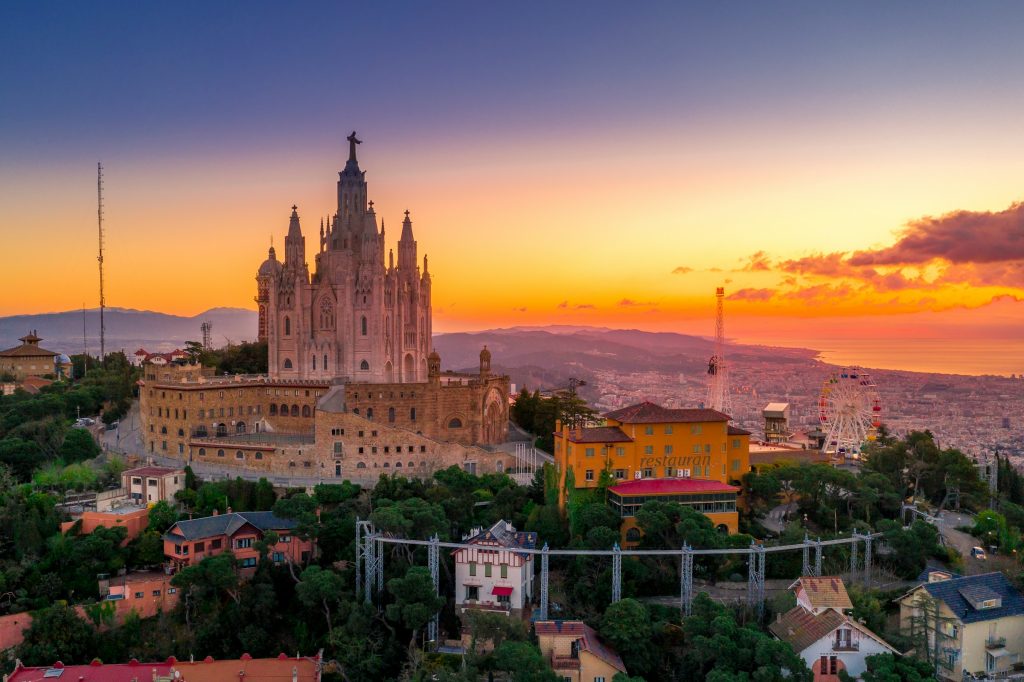
The third day is best reserved for Montjuïc or Bunkers del Carmel. Montjuïc works well because it gives you a lot of walking space and city views even without adding a bunch of paid attractions. If you want a museum, you can plan around MNAC during its free-entry hours. The alternative is Bunkers del Carmel as a strong free viewpoint if you want to end the trip without another heavy day for the budget.
The main principle behind these plans is simple: one expensive attraction per day is already enough. Everything else in Barcelona is better filled out with neighborhoods, viewpoints, parks, the beach, and museum free-entry windows, rather than turning the route into a chain of ticket counters.
Common Barcelona Budget Mistakes to Avoid
- Staying in the most touristy area — an address around La Rambla or right in the old center often gives the weakest value for money.
- Not factoring in the tourist tax — in Barcelona, it has a noticeable effect on the final accommodation cost, especially on a short trip.
- Taking taxis where the metro or bus is enough — around the city, this is often an unnecessary expense without any real time advantage.
- Buying lots of single tickets instead of a travel pass — if you are using transport several times a day, this is usually less cost-effective than a transport card.
- Taking the metro from the airport “out of habit” without checking the fare — the L9 Sud line requires a special airport ticket, and a regular TMB single ticket does not apply there.
- Eating right on the most touristy streets — especially in areas like La Rambla, where prices are often higher and the quality is not always better.
- Buying tickets to top attractions at the last minute — this makes it more likely that you will get an inconvenient time slot, a more expensive option, or no good option at all.
- Not checking museum free-entry hours in advance — Barcelona does have them, but they often work only with advance booking and limited slots.
The easiest way not to overpay in Barcelona is not to chase accommodation in the most touristy center, not to pack too many paid attractions into one day, and to explore the city by areas rather than as a checklist of “everything at once.” In most cases, it is accommodation, the tourist tax, and tickets to the top attractions that inflate the trip budget the most.